
FM Consulting
AI Support Workflow Optimization
A platform-agnostic AI triage layer for support teams — connects to Zendesk, Salesforce, or any ticketing system, classifying tickets and drafting ready-to-send responses with a human review step before anything goes out.
Case study
The problem
Support teams juggle tickets across one or more platforms — Zendesk, Salesforce, Freshdesk, in-house tools — and every one of them still has to be read, categorized, prioritized, and answered by hand. That doesn't scale, and it doesn't stay consistent across agents, shifts, or busy periods. Most AI add-ons only solve this inside one vendor's own product, which leaves teams running more than one platform, or planning to switch platforms, without a real answer.
The solution
This tool adds an AI triage layer on top of whatever support platform is already in use. Every incoming ticket is classified by category and priority with a plain-language explanation of the reasoning, and paired with a ready-to-send draft response — all in one step. Nothing goes out automatically: a person reviews each draft, edits it if needed, and approves it, and every step is logged so the whole process stays transparent rather than a black box. Because the tool is built as a layer above the ticketing platform rather than a feature inside one specific product, the same triage experience carries over whether the tickets come from Zendesk, Salesforce, or several systems at once.
How it was built
The platform connection was treated as a first-class, swappable piece of the product from day one, not something bolted on afterward. The AI classification, drafting, and human-review workflow is built once and stays identical regardless of where tickets come from — adding support for a new platform is a matter of pointing the same engine at a new connector, not rebuilding the triage experience for each one. That separation is what makes the tool genuinely platform-agnostic rather than a Zendesk feature with Salesforce bolted on as an afterthought, and it keeps the reviewer experience, the audit trail, and the reporting consistent no matter which system — or how many at once — is feeding it tickets.
More projects
- Customer Experience
- Platform
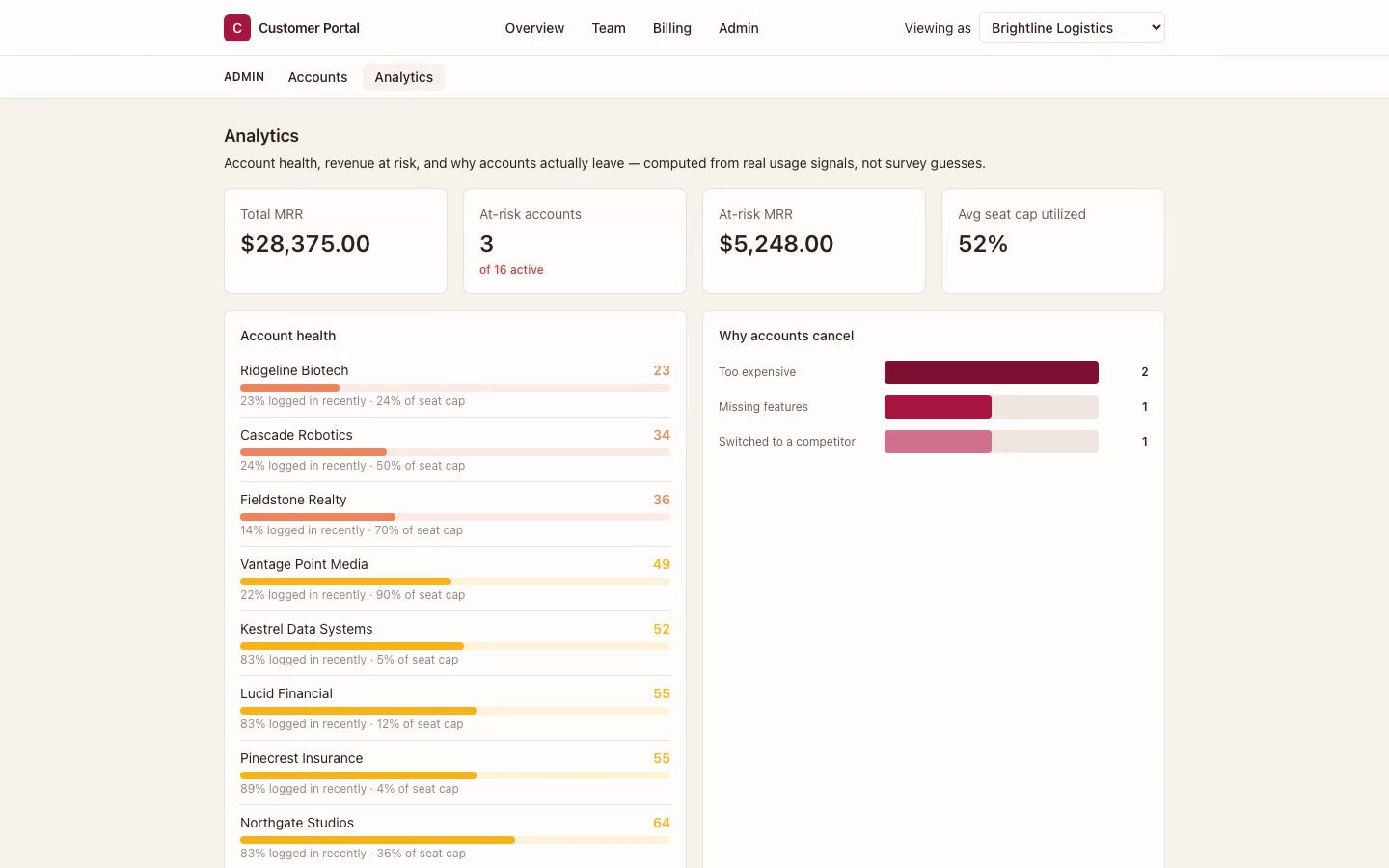
Customer Portal Improvement Program
A self-service account portal for team, plan, and billing management — paired with an internal account-health view that scores churn risk from real usage data, not guesswork.
- Operations
- Customer Experience
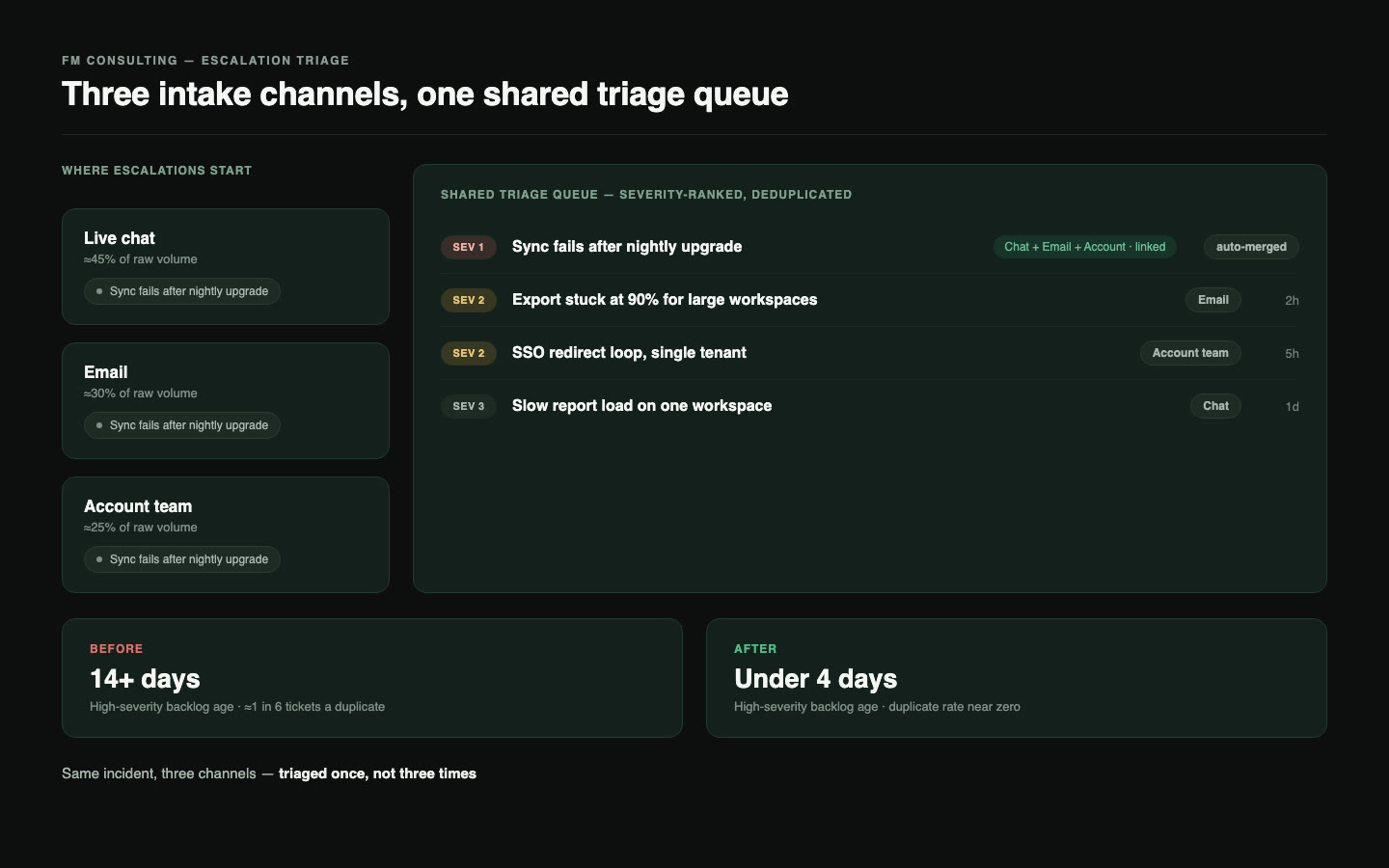
Cross-Channel Escalation Triage Program
Reduced escalation backlog by introducing a shared triage operating model across support, product, and engineering.
- AI
- Operations
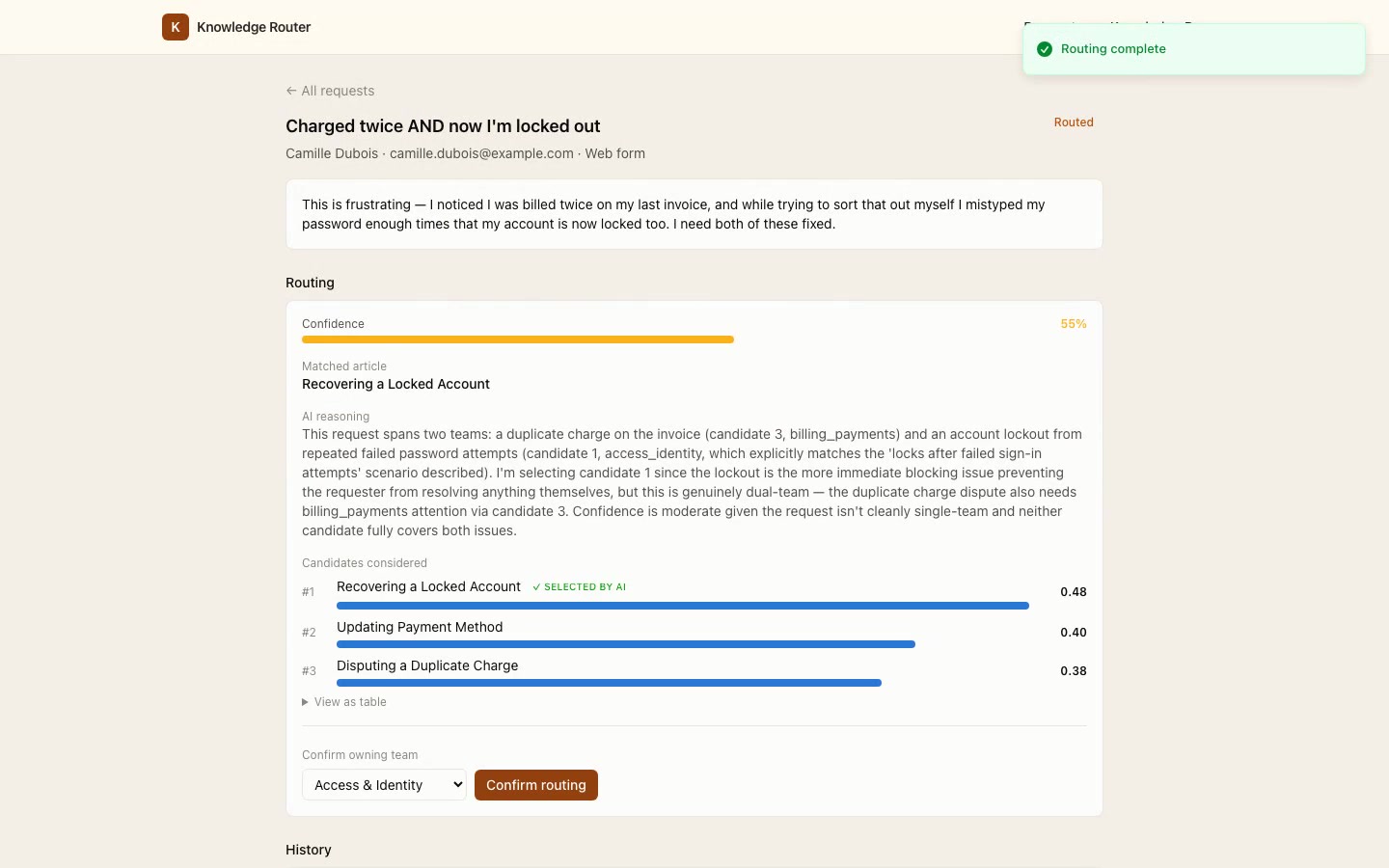
Knowledge Router
An AI-powered request-routing engine — real semantic search narrows an incoming request to the closest knowledge articles, then Claude judges which one (if any) genuinely resolves it, states an honest confidence score, and suggests the owning team.